

Are You Actually Washing Your Hands Correctly? Here's What the Science Says
Hand hygiene is one of those things everyone assumes they're doing right. You've been washing your hands your whole life. How complicated can it be?
Turns out more than most of us realise. A 2025 national survey by the Food Safety Information Council found that 28% of Australian men and 18% of Australian women admit they don't always wash their hands after using the bathroom. And that's just the people who admitted it.
The good news is that washing your hands properly isn't complicated. But there's a real difference between a quick rinse and a wash that actually removes the pathogens you're trying to get rid of. Here's what the science says.
Why Handwashing Works and Why It's the Most Effective Hygiene Habit You Have?
Soap doesn't kill germs the way a disinfectant does. What it actually does is more elegant than that.
Soap molecules have two ends — one that bonds with water, one that bonds with oil and fat. When you lather up, those molecules surround the oily layer that bacteria and viruses cling to, lift them off your skin, and allow them to rinse away with the water.
For viruses like influenza and the common cold — which are surrounded by a lipid (fatty) membrane — this process is remarkably effective. Soap physically dismantles that membrane, rendering the virus inactive before it rinses away.
This is why the WHO, the Australian NHMRC, and virtually every public health body on earth consistently ranks handwashing as the single most effective measure for preventing the spread of infectious illness. Not supplements. Not air purifiers. Soap and water, applied correctly.
How Long Should You Wash Your Hands? The 20-Second Rule Explained
The 20-second recommendation isn't arbitrary. It's based on the time required to generate enough friction across all surfaces of your hands to effectively dislodge pathogens — including the areas most people miss.
Research consistently shows that most people wash for around 6 seconds on average. That's enough to remove visible dirt, but not nearly enough to address microbial contamination properly.
To hit 20 seconds without counting: hum the chorus of a song, or recite something you know by heart. It sounds trivial, but building a physical habit around a time cue is genuinely effective, especially for children.
The Technique Most People Get Wrong
Duration matters, but so does coverage. The areas most commonly missed during handwashing are:
- Thumbs: most people wash their palms instinctively but forget to rotate around each thumb
- Between fingers: interlace fingers and move them back and forth
- Fingertips and under nails: rub fingertips against the opposite palm
- The backs of hands: rub the back of each hand with the opposite palm
It sounds like a lot, but once the technique is habitual it takes no extra time. The full WHO handwashing method — six steps covering all surfaces — takes around 20 to 30 seconds and becomes second nature quickly.
When to Wash: The Moments That Actually Matter
Washing frequently but at the wrong moments is far less effective than washing less often but at the right ones. The highest-impact moments for handwashing at home are:
- Before and after preparing food — especially after handling raw meat, poultry, or eggs
- Before eating
- After using the bathroom
- After blowing your nose, coughing, or sneezing
- After touching pets or handling pet food
- After taking out the rubbish
- When arriving home from outside
That last one is underrated. Your hands come into contact with dozens of shared surfaces every time you leave the house — door handles, payment terminals, public transport. Washing immediately on arriving home is one of the simplest ways to stop those pathogens entering your home environment.
Foam vs Liquid Soap: Is There a Difference?
Short answer: no, not meaningfully.
Both foam and liquid soaps work through the same mechanism. The key variable is technique and duration, not format. That said, foam soap does have a practical advantage — it distributes across your hands more quickly and evenly, making it slightly easier to achieve full coverage without extra effort. For kids especially, the foam format tends to make handwashing feel more engaging and easier to do properly.
What matters most is that you're using soap at all, washing for long enough, and covering all surfaces. The format is secondary.
Does Antibacterial Soap Work Better?
This is a common misconception worth clearing up. For everyday household handwashing, regular soap is just as effective as antibacterial soap — and in some cases, better.
Here's why: most of the pathogens you're protecting against at home are viruses, not bacteria. Antibacterial agents don't target viruses. They also don't have time to work during a normal handwash — most require several minutes of contact time to be effective, which doesn't happen in practice.
The Food and Drug Administration (FDA) has noted that there's no evidence antibacterial soaps provide greater protection than regular soap in household settings. Save the antibacterial products for specific situations — they're not necessary for everyday use.
Make It a Better Experience and You'll Do It More
One genuinely underappreciated factor in hand hygiene compliance is friction — not the soap-related kind, but the behavioural kind.
The more pleasant and effortless handwashing is, the more consistently people do it. This is well-established in behavioural science and directly relevant to building good habits in households with children.
A good soap you enjoy using, a dispenser that works without fumbling, and a sink area that feels clean and inviting all contribute to handwashing being something people want to do rather than skip. Small environmental factors make a bigger difference to habit formation than most people expect.
LumiFoam: Built Around the Handwashing Habit
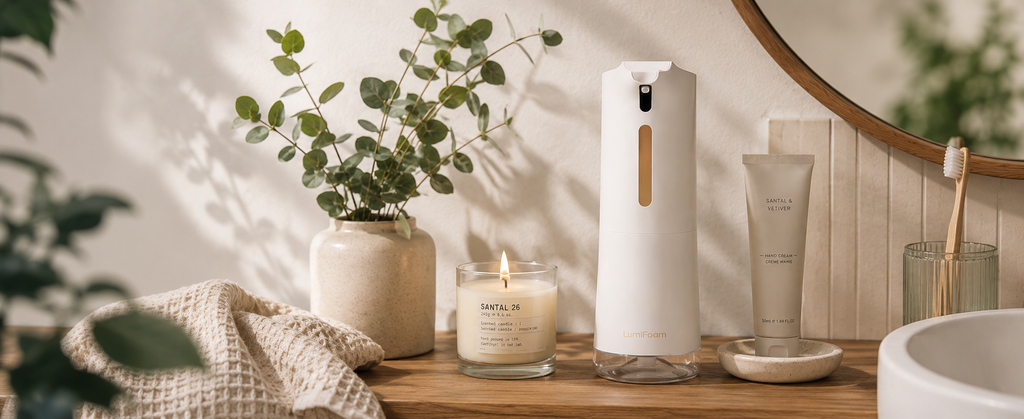
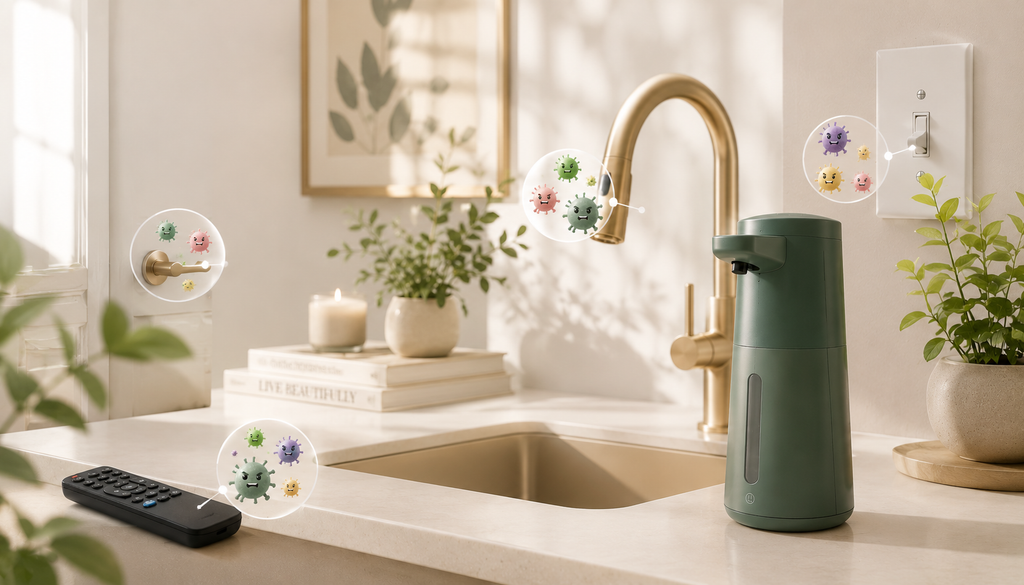
LumiFoam's automatic foam dispenser removes the one touchpoint that most people never think about — pressing the soap pump with the very hands you're about to wash.
With an infrared sensor that activates in 0.25 seconds, you get the right amount of foam every time, with nothing to press, pump, or clean around the base. It works with any standard foaming hand wash, charges via USB-C, and is designed to sit comfortably in any bathroom or kitchen.
If hand hygiene matters in your household — and the research makes clear that it should — it's worth making the experience as frictionless as possible.
Related Articles

13
Jun

10
Jun

09
Jun
08
Jun
08
Jun
