

How to Stop the Flu Spreading Through Your Home This Winter
Australia's flu season runs June through August. And if 2025 was anything to go by with over 150,000 confirmed cases and one of the most severe seasons in recent years it's worth getting your home ready before someone in the household goes down.
The good news is that most flu transmission at home is preventable. Not with expensive products or complicated routines, but with a small number of consistent habits applied at the right moments.
Here's what actually works.
How the Flu Spreads at Home
Before you can stop it, it helps to understand how it moves.
The influenza virus spreads two main ways: through respiratory droplets (coughing, sneezing, talking in close contact) and through surface contact touching a contaminated surface and then touching your face.
That second pathway is the one most households underestimate. The flu virus can survive on hard surfaces like benchtops, door handles, and tap fittings for up to 48 hours. On soft surfaces like tissues and fabric, it typically loses infectivity within 8 to 12 hours shorter, but still long enough to cause transmission.
The average person touches their face around 23 times an hour without realising it. Eyes, nose, and mouth are the entry points. Hands are the delivery mechanism.
This is why hand hygiene is consistently ranked as the single most effective measure for preventing flu transmission above supplements, above surface sprays, above almost anything else you can do at home.
The High-Risk Moments in Your Home During Flu Season
Not all moments carry equal risk. These are the ones that matter most during flu season:
- Coming through the front door. Hands have touched countless surfaces outside: public transport, shopping trolleys, ATM buttons, door handles. Washing hands immediately on arriving home is one of the highest-impact habits you can build.
- Before and after caring for someone who is sick. If a family member is unwell, hand hygiene before and after any contact. Bringing them food, changing bedding, handling used tissues is critical.
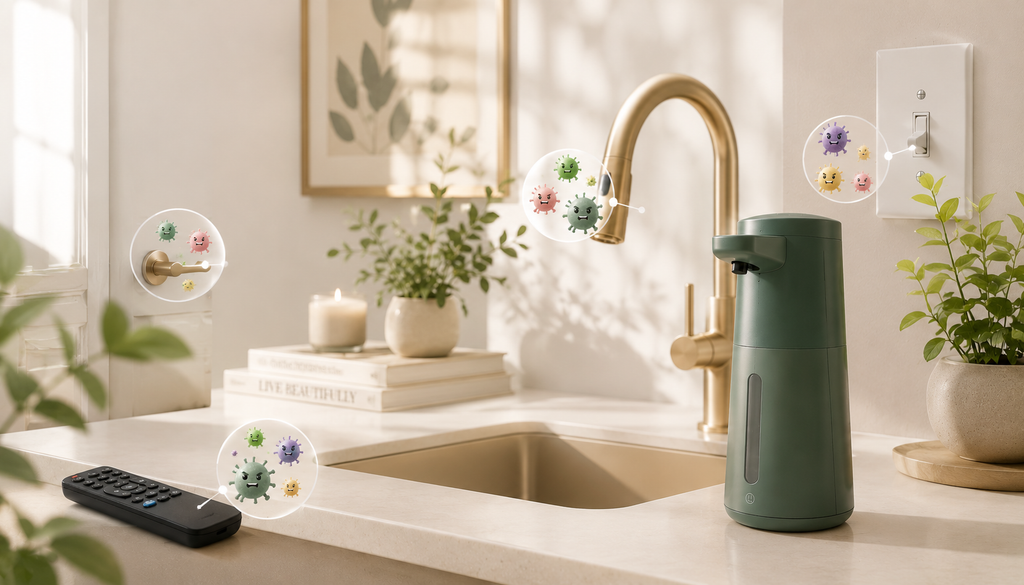
- After touching shared surfaces. Light switches, remote controls, tap handles, fridge doors, and phone screens are all high-touch surfaces that rarely get disinfected. Avoid touching your face after using any of these during flu season.
- Before eating or preparing food. Obvious in principle, but easy to skip when you're distracted or in a hurry.
What to Actually Disinfect (and How Often)
Surface cleaning during flu season doesn't mean cleaning more — it means cleaning the right things.
Focus on high-touch surfaces, disinfected daily when someone in the household is unwell:
- Door handles and light switches: wipe with a disinfectant spray or wipe; takes under two minutes for the whole house
- Tap handles touched before and after handwashing, making them a consistent recontamination point
- Remote controls and phones often completely overlooked; a quick wipe with a disinfectant wipe makes a real difference
- Bathroom surfaces sink, tap, toilet flush button
- Kitchen benchtops especially around the sink area
For disinfection to work, the surface needs to stay visibly wet for the contact time listed on the product (usually 30–60 seconds). A quick wipe and immediate dry-off doesn't give the active ingredients time to work.
What Actually Helps (and What Doesn't)
There's a lot of advice floating around every winter. Here's a clear-eyed take:
Evidence-backed:
- Thorough handwashing with soap and water for 20 seconds — the most effective single intervention
- Annual flu vaccination — reduces severity and transmission significantly
- Disinfecting high-touch surfaces daily when someone is sick
- Staying home when unwell — the obvious one that still gets ignored
Helpful but overstated:
- Hand sanitiser — effective when soap and water aren't available, but not a substitute for proper handwashing
- Vitamin C and zinc — may reduce duration slightly once sick, but evidence for prevention is thin
- Air purifiers — can reduce airborne particles but won't prevent surface transmission
Mostly noise:
- Antibacterial soaps — the flu is a virus, not a bacteria; antibacterial agents don't target it. Regular soap and water is just as effective
- Most "immunity boosting" supplements — no strong evidence for flu prevention specifically
Building a Winter Hygiene Routine That Sticks
The challenge with flu prevention habits isn't knowing what to do — it's remembering to do it consistently when you're busy and tired.
A few things that help:
- Anchor habits to existing ones. Washing hands the moment you walk in the door is easy to remember if you hang your keys right next to where you wash your hands. Wiping down the remote control can happen every evening when the TV goes on.
- Make it frictionless. The easier handwashing is, the more often it happens. If your soap dispenser requires you to fumble with a pump or clean up drips every time, it adds just enough friction that people skip it — especially kids.
- Set the example. If you have children, your habits are their habits. The more automatic and visible good hand hygiene is in your household, the more naturally they adopt it.
How LumiFoam Fits Into a Winter Hygiene Routine
One of the simplest ways to improve hand hygiene compliance in a household — especially with kids — is removing every barrier between wanting to wash your hands and actually doing it.
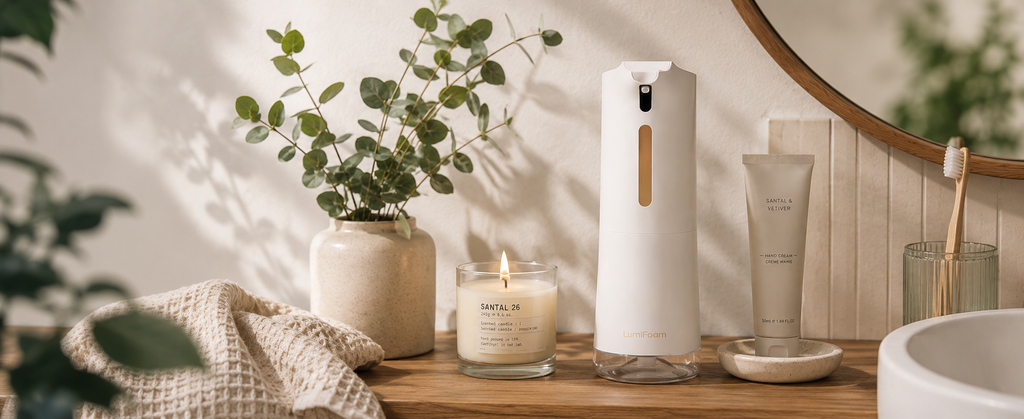
LumiFoam's automatic foam dispenser does exactly that. No pump to press, no drips, no residue. Just wave your hand and you've got foam in under a second. It uses any standard foaming hand wash, charges via USB-C, and sits on any bathroom or kitchen benchtop without looking out of place.
During flu season, it earns its keep. Fewer reasons to skip handwashing. Less cross-contamination at the point of dispensing. And one less surface to disinfect.
Shop LumiFoam's automatic soap dispenser → Free shipping across Australia.
Stay well this winter. Questions? care@lumifoam.com.au
Related Articles

13
Jun

10
Jun

09
Jun
08
Jun
08
Jun
